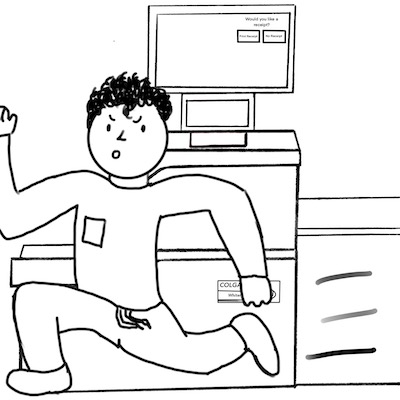
CVS Self-Checkout
A contextual inquiry into the self-checkout interface at CVS

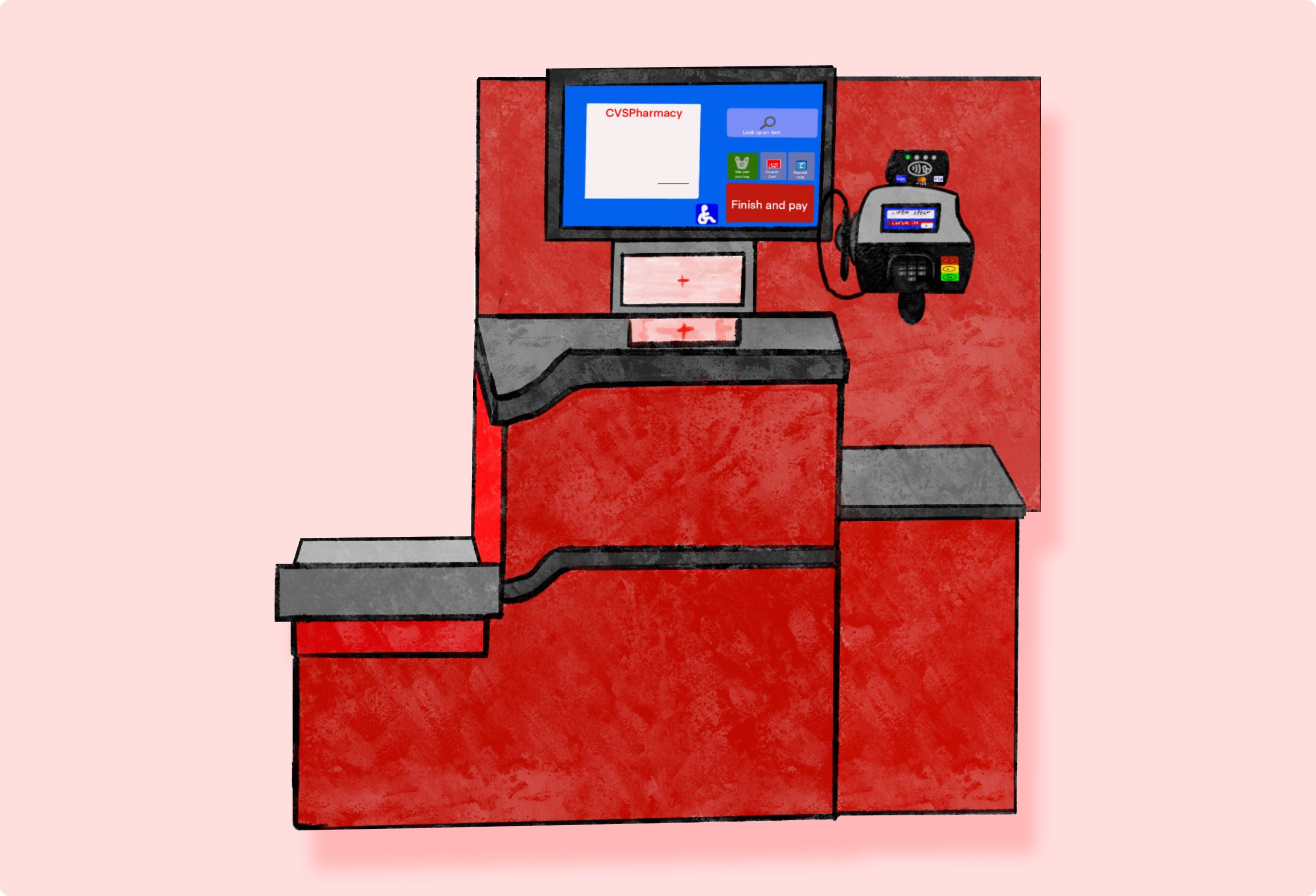
Project Problem and Context
Context
The share of stores employing self-checkout machines has risen considerably in the past decade, in spite of some customer backlash with the experience. In this analysis, I will work to understand the types of customers that use the self-checkout machine at CVS and their experiences and frustrations, which I will translate to the development of two personas for self-checkout users and a storyboard of an experience with the interface.
Timeline: 3 Weeks (September - October 2022)
Team Size: 1
Role: Interviews and Analysis
Design Problem
Understand customers and develop personas for users of self-checkout kiosks at CVS.
Background
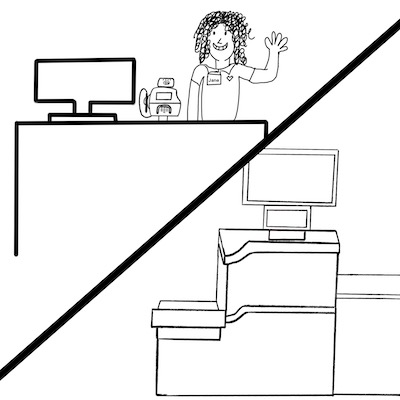
The self-checkout at CVS serves customers who don’t wish to use a traditional cashier checkout, reducing overall checkout congestion and speeding up the checkout process for customers.
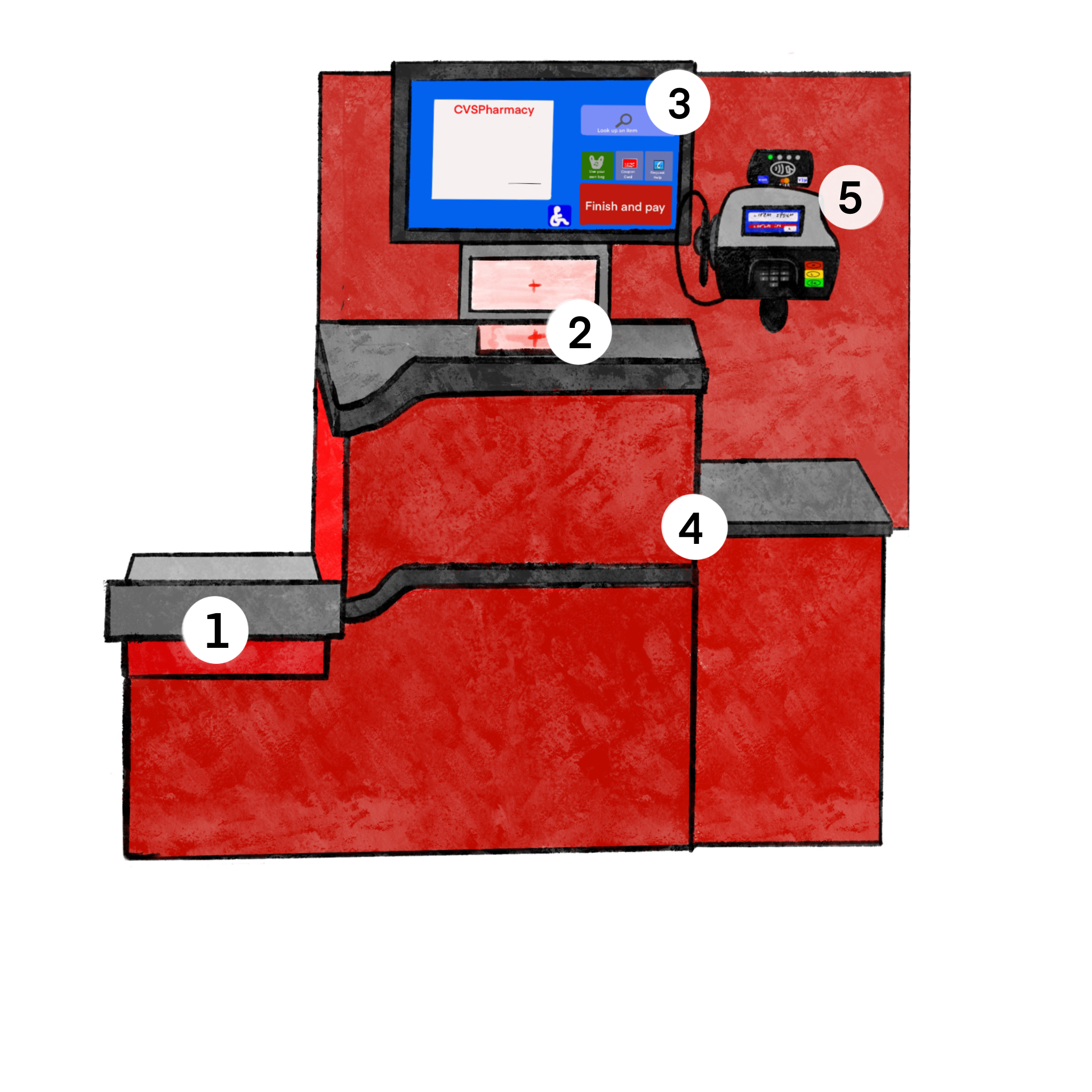
1) This area is where customers are meant to place their items when they arrive at the self-checkout, ideally preventing fumbling while scanning.
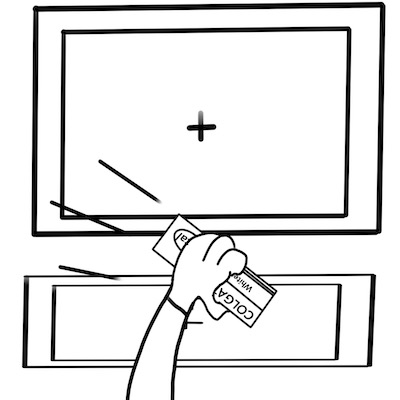
2) This area is where users scan their items. There are scanners facing both up and towards the user.
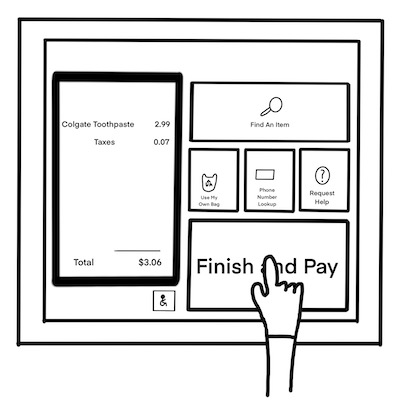
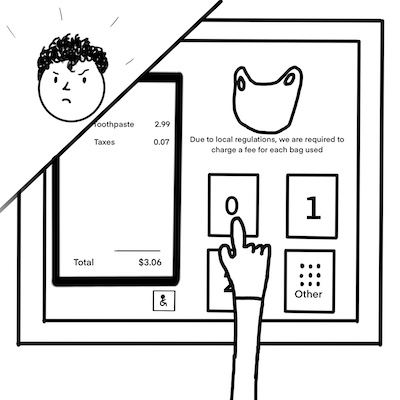
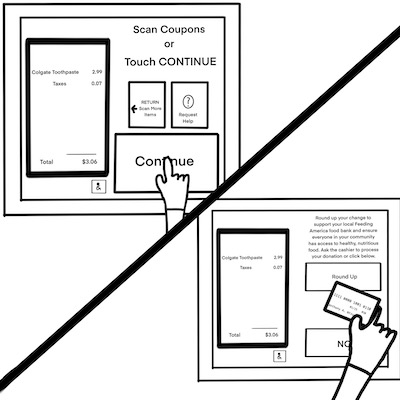
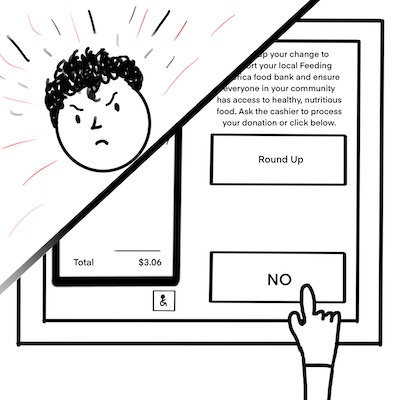
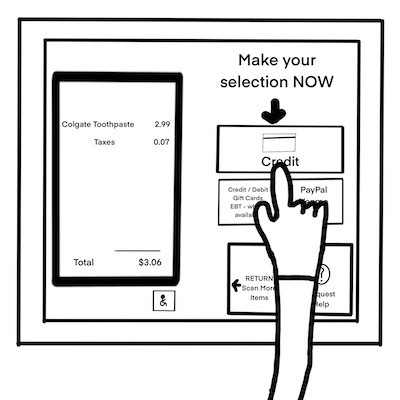
3) This screen is where a user sees the items they purchased, the total cost, and where they can indicate that they are ready to pay, have coupons, have bags, need to look up an item or need assistance. After a user taps “Finish and Pay”, a number of screens and buttons come up, including an option to donate to charity, a payment method selection, and an option to receive a receipt.
4) This is the bagging area where a voice prompt tells users to place each item after scanning.
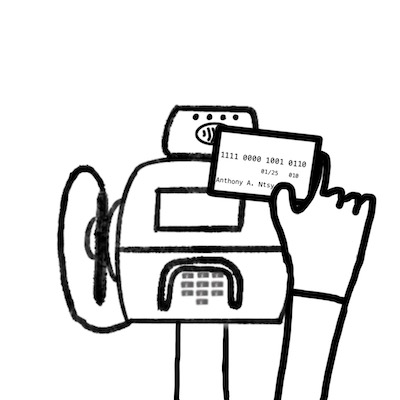
5) This is the credit card terminal where a user can swipe, tap, or insert a debit or credit card.
Observations and Responses
The following observations were made from watching 3 users of the CVS self-checkout. After they finished checking out, the 3 users were asked a series of questions and their responses were recorded below.
Observations
1) Many users tapped through all the checkout buttons very quickly, waiting only for the screen to switch and register their taps.
2) A few users had their card out before the option to use the terminal was available, making a motion towards the terminal with their card after tapping a button (even if another button press was needed before payment).
3) When prompted by voice to place items in the bagging area, some users placed items in the pre-bagging area on the left, prompting the self-checkout to request cashier assistance.
4) Some users would go on their phone while waiting for the self-checkout to register their button presses
5) Users who needed assistance from cashier would often stand, looking around while the self-checkout light lit up.
6) Some users would hover their finger over the screen, waiting for the next prompt to come up.
Questions & Responses
1) What feelings do you associate with shopping at CVS?
i) Shopping at CVS is a burden(most respondents)
ii) It's a pain and can be awkward.
iii) Always concerned with time, in a rush
2) Why did you use the self checkout?
i) Fastest way to checkout (all respondents)
ii) Didn’t want to interact with or talk to cashier (a few respondents)
iii) Didn’t want judgment for item purchases (one respondent)
3) How long did you plan on spending in CVS?
i) A few minutes (all responses)
ii) 5 minutes (most common answer)
4) What feelings do you associate with using the self checkout?
i) Positive, it’s the fastest way of buying items (most respondents)
ii) Is exactly what expected
iii) Anxiety: I’m in a rush
iv) Can be confusing and embarrassing, especially embarrassing when cashier has to come over
Personas
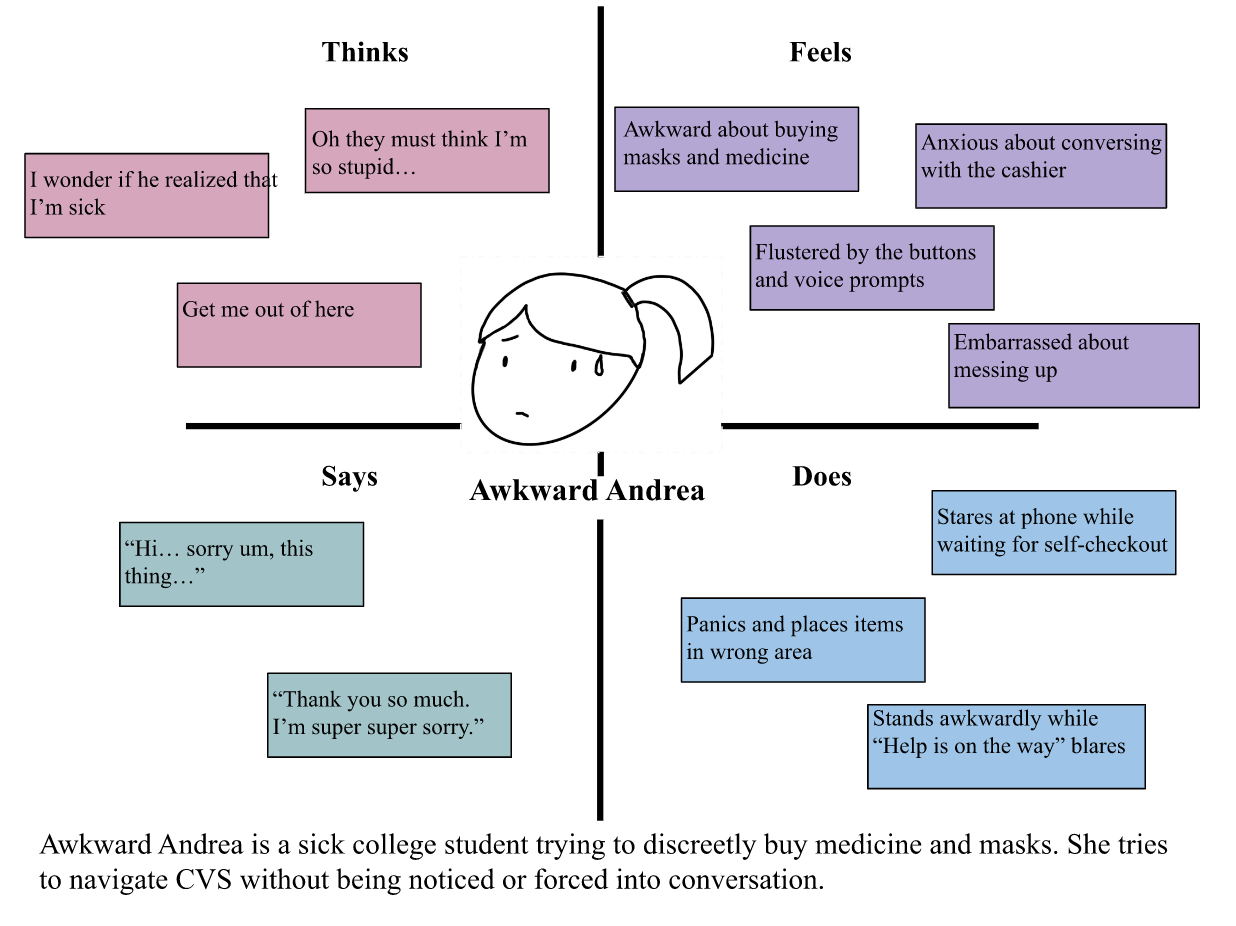
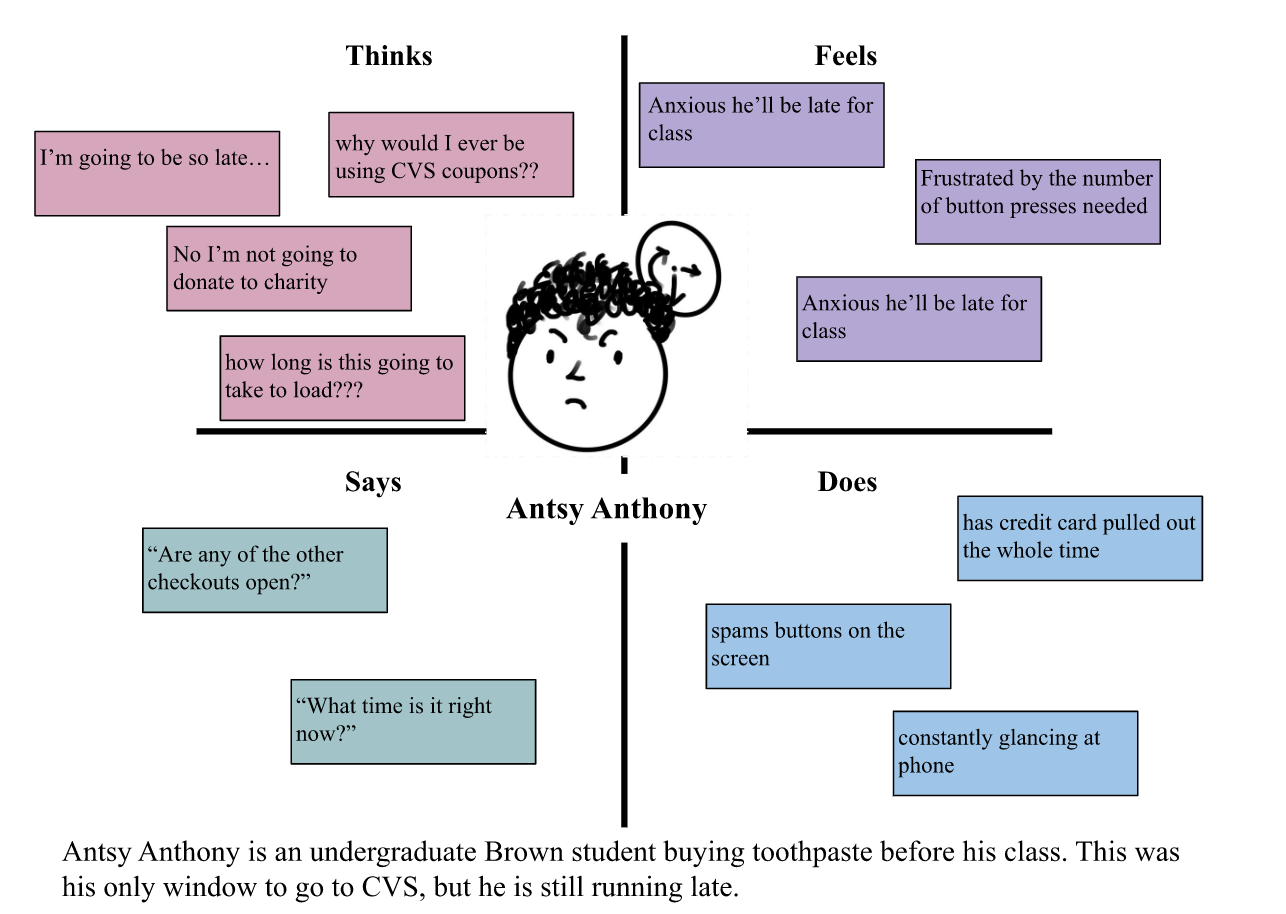
Based off observations and responses, two personas were developed for users of the CVS self-checkout.